
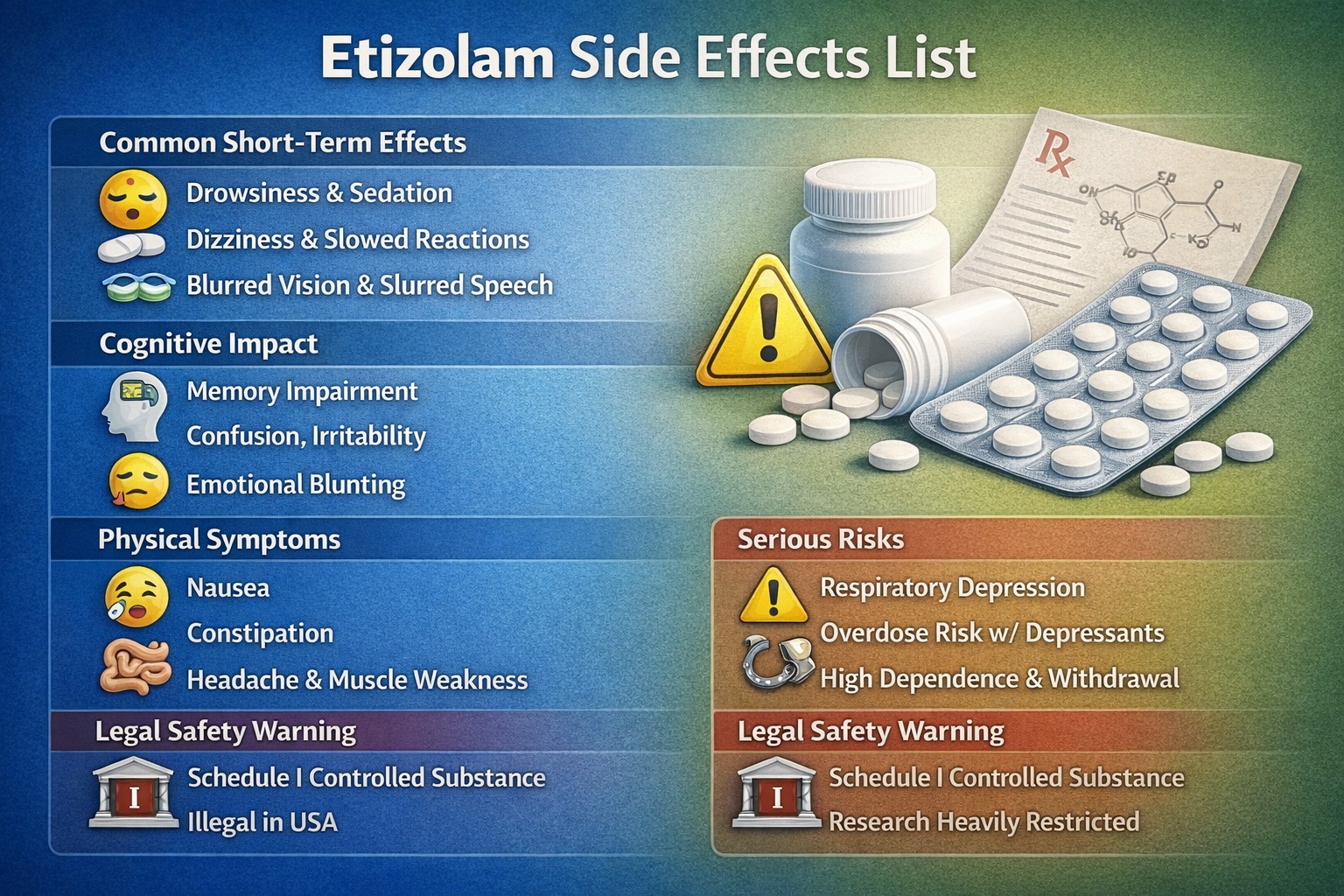
Understanding the full etizolam side effects list is essential for anyone researching this substance from a medical, regulatory, or harm-reduction perspective. Although etizolam is prescribed in some countries for anxiety and insomnia, it is not approved for medical use in the United States and is currently regulated as a Schedule I controlled substance at the federal level.
This article provides a clinically grounded, non-promotional overview of etizolam’s known side effects, drawing from toxicology reports, pharmacological data, and regulatory evaluations.
What Is Etizolam?
Etizolam is a thienodiazepine, a class closely related to benzodiazepines. It acts on the GABA-A receptor, producing anxiolytic, sedative, muscle-relaxant, and hypnotic effects.
According to the DEA etizolam drug and chemical evaluation, the substance has been increasingly associated with misuse, overdose events, and illicit distribution
👉 DEA etizolam drug profile:
https://www.deadiversion.usdoj.gov/drug_chem_info/etizolam.pdf
Internationally, etizolam appears in products such as Etizex 1 mg, Etilaam, and Etibest-MD, though U.S. federal law does not recognize approved medical use
👉 Etizex 1 mg:
👉 Etilaam:
👉 Etibest-MD:
Common Etizolam Side Effects (Short-Term)
Short-term side effects typically occur soon after use and are related to central nervous system depression.
Frequently reported effects include:
- Drowsiness or sedation
- Dizziness or lightheadedness
- Slowed reaction time
- Impaired coordination (ataxia)
- Blurred or double vision
- Slurred speech
In clinical observation, these effects resemble those seen with traditional benzodiazepines such as alprazolam, though intensity may vary by dose and individual sensitivity.
Cognitive and Psychological Side Effects
Etizolam can significantly affect cognitive and emotional functioning, especially with repeated or higher exposure.
Cognitive and mental effects may include:
- Memory impairment or amnesia
- Difficulty concentrating
- Confusion or disorientation
- Emotional blunting
- Reduced alertness
These effects overlap with those documented for benzodiazepines, a comparison discussed in detail in benzodiazepines vs Z-drugs pharmacology
👉 benzodiazepines vs Z-drugs explained:
Gastrointestinal and Physical Side Effects
Some individuals experience physical side effects unrelated to sedation alone.
Reported physical symptoms:
- Nausea
- Dry mouth
- Constipation
- Headache
- Muscle weakness
- Reduced appetite
Although not life-threatening on their own, these symptoms can contribute to overall discomfort and reduced quality of life.
Serious and High-Risk Side Effects
More severe side effects are less common but carry significant safety concerns, particularly when etizolam is combined with other depressants.
Serious risks include:
- Respiratory depression
- Profound sedation or loss of consciousness
- Severe hypotension
- Increased risk of overdose when combined with opioids or alcohol
According to NIH-indexed toxicology reviews, benzodiazepine-like compounds substantially increase overdose risk when used in combination with opioids
👉 NIH / PubMed review on CNS depressant interactions:
Dependence, Tolerance, and Withdrawal Effects
One of the most clinically important entries on the etizolam side effects list is the potential for dependence and withdrawal.
With repeated use, individuals may experience:
- Tolerance (needing higher amounts for the same effect)
- Psychological dependence
- Physical dependence
Withdrawal symptoms may include:
- Rebound anxiety
- Insomnia
- Irritability
- Tremors
- Sweating
- In severe cases, seizures
These effects are consistent with GABA-modulating drugs, reinforcing why regulators consider etizolam high-risk.
Legal and Regulatory Safety Considerations
Beyond physiological effects, legal consequences represent an indirect but serious risk.
Etizolam remains classified as a Schedule I substance under a temporary DEA order, extended through 2026
👉 DEA temporary scheduling notice (Federal Register):
This classification means:
- No accepted medical use in the U.S.
- Unauthorized possession or distribution is illegal
- Research use requires special federal authorization
How Etizolam Side Effects Compare to Other Medications
Some FDA-approved medications used for anxiety or sleep operate through different mechanisms, which affects their side-effect profiles.
For example:
- Escitalopram, an SSRI, does not cause sedation or dependence in the same way
👉 escitalopram overview: https://myetizolam.net/product/escitalopram/ - Sleep agents like Hypnite or trazodone carry different risk profiles
👉 Hypnite: https://myetizolam.net/product/hypnite/
👉 trazodone (Trazocan): https://myetizolam.net/product/trazodone-trazocan/
Understanding these distinctions helps contextualize etizolam’s risks beyond potency alone.
Key Takeaways: Etizolam Side Effects List
- Etizolam commonly causes sedation, dizziness, and cognitive impairment
- Serious risks include respiratory depression and overdose, especially with other depressants
- Dependence and withdrawal are well-documented concerns
- Legal status in the U.S. adds an additional layer of risk
- Side effects overlap with benzodiazepines but are not clinically interchangeable
From a medical and regulatory standpoint, side effects should be evaluated alongside legality, duration of action, and misuse potential.